Guiding Culturally Safe Care for Indigenous Patients
by Gina Fata
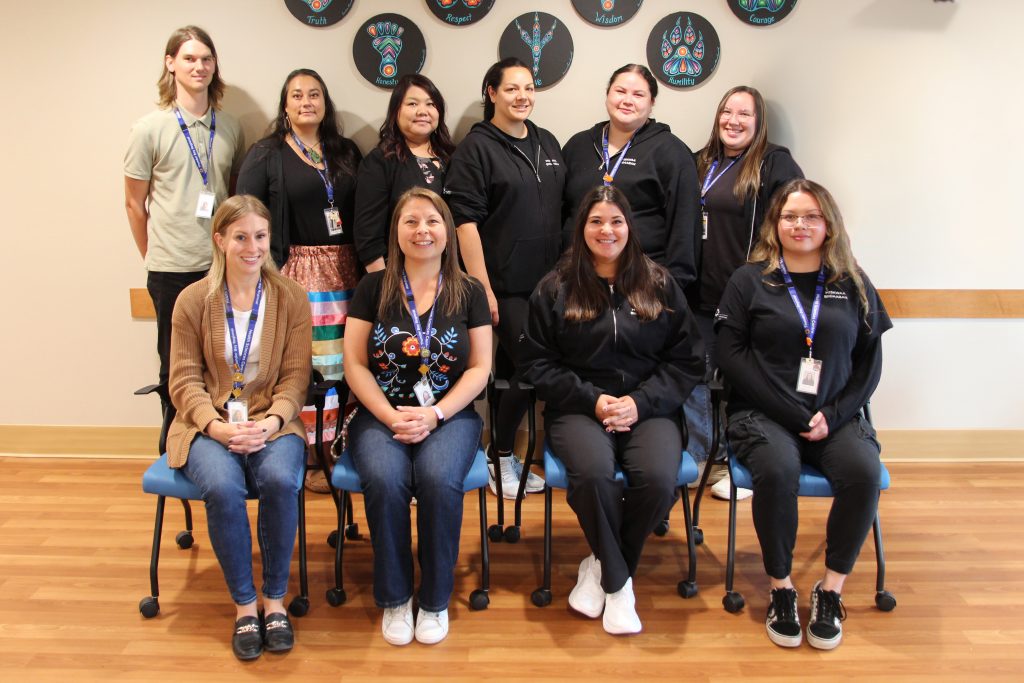 Members of the Miskwaa Biidaaban team (Red Dawn Indigenous Collaboration department) at Thunder Bay Regional Health Sciences Centre.
Thunder Bay Regional Health Sciences Centre (TBRHSC) is committed to moving beyond symbolic gestures and advancing deep, structural transformation in health care for Indigenous patients, families, and communities. Grounded in our core values of diversity, compassion, innovation, and accountability, this commitment ensures we deliver exceptional care to every patient, every time.
TBRHSC recognizes that Indigenous Peoples, especially First Nation Peoples from remote Northwestern Ontario communities, face significant barriers and inequities in accessing health care. TBRHSC is committed to addressing these challenges by providing equitable, culturally safe care in a welcoming environment, increased Indigenous representation, and the integration of Indigenous perspectives guiding all efforts to advance meaningful change.
To enhance culturally safe care, TBRHSC has established dedicated frontline positions to support Indigenous patients and families. Indigenous Care Coordinators (ICC) work with inpatients to provide advocacy, navigation, discharge planning and access to community resources. Additionally, ICCs work with the Traditional Wellness Lead to help Indigenous patients with physical, emotional, mental, and spiritual comforts. The Traditional Wellness Lead facilitates access to traditional and spiritual care by working with Elders and Knowledge Keepers to foster a culturally safe environment. These roles are part of Miskwaa Biidaaban (Red Dawn Indigenous Collaboration department), which was named through a traditional ceremony led by an Ojibwe Elder to symbolize respect, reclaiming traditional names and meaningful partnership. Together, these roles ensure Indigenous patients and families feel respected, supported, and safe throughout their health care journey.
While these frontline roles provide direct advocacy, it is equally important that organizational strategy and decision-making are informed by Indigenous voices. To align frontline patient care with Hospital policy, TBRHSC established the Indigenous Partners Steering Committee.
Comprised of representatives from Indigenous organizations, and guided by Elders, the Committee meets quarterly to provide best-practice guidance and uphold accountability. This structure helps Miskwaa Biidaaban align with service commitments and formal partnerships, supporting culturally appropriate care for Indigenous patients, families, and staff. The Committee also provides valuable feedback on Indigenous initiatives developed within Strategic Plan 2026, demonstrating a commitment to meaningful community engagement.
Building on the Committee’s guidance, the Indigenous Health Framework was developed to set shared expectations for advancing equity and belonging for Indigenous peoples, clarifying accountability at all organizational levels. The priorities of the Framework are: partnerships, cultural well-being and education, addressing Indigenous-specific racism, recruitment and retention as well as embedding a way to measure and evaluate progress. Shaped by both local and provincial perspectives, the Framework embeds Indigenous ways of knowing throughout governance, strategy, and everyday work.
Engagement during the development of TBRHSC’s Equity, Diversity, and Inclusion (EDI) Framework revealed synergies with EDI concepts, but also highlighted the need for a distinct, rights-based approach to Indigenous health sovereignty. In response to these findings, the Indigenous Health Framework was developed separately from other EDI and anti-racism frameworks to ensure the unique priorities of Indigenous communities are recognized and guided with cultural safety. Ongoing leadership from the Committee shapes how this Framework is applied in practice, ensuring Indigenous ways of knowing remain foundational to ongoing improvement.
This dedicated focus sets the stage for broader structural change in how care is delivered and governed. True health care equity requires a shift in perspective. By honouring structural sovereignty alongside compassionate frontline care, TBRHSC ensures that every Indigenous patient can receive exceptional, culturally safe care.
At TBRHSC, reconciliation is not just a policy; it is an ongoing journey that shapes every decision and action. TBRHSC’s commitment to the Truth and Reconciliation Commission’s Calls to Action is brought to life through transparent public reporting, active collaboration, and a willingness to keep learning. By centring Indigenous voices, the goal remains to build lasting trust and genuine equity for patients, families, and communities.