TBRHSC Launches Upgrade to Critical Sterilization Department to Support Cardiovascular Surgery Expansion
by Raiili Pellizzari
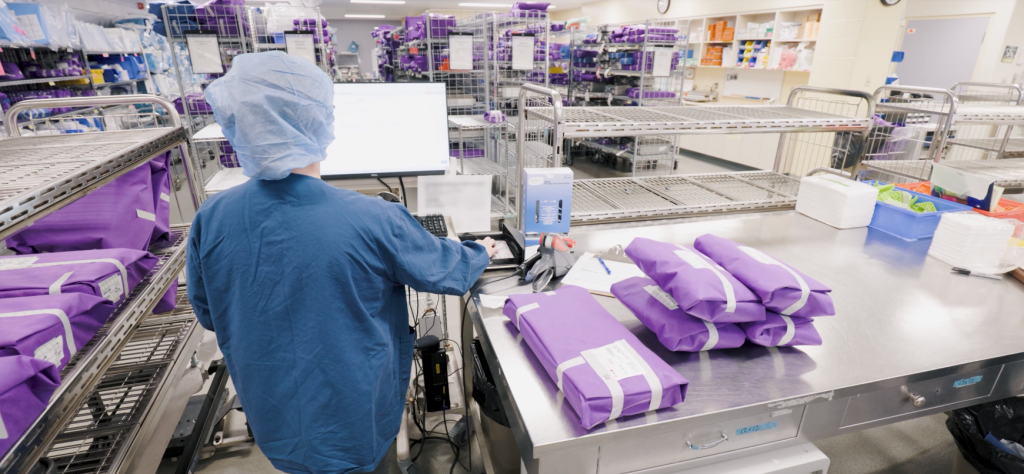 The Medical Device Reprocessing Department at Thunder Bay Regional Health Sciences Centre is responsible for cleaning, sterilizing, packaging, and dispersing the tools needed for surgeries and other procedures in the Operating Rooms and throughout the Hospital.
A significant behind-the-scenes transformation is underway at Thunder Bay Regional Health Sciences Centre (TBRHSC), with a major renovation and expansion of the Medical Device Reprocessing Department (MDRD).
MDRD is a vital service that underpins every sterile medical procedure. The project aims to strengthen patient safety, improve care quality, and increase capacity as surgical volumes and complexity continue to rise.
MDRD is being redeveloped into a modern, purpose-built space designed to meet today’s rigorous health care standards. Planned upgrades include expanded and reconfigured work areas to streamline the flow of instruments from decontamination to sterilization, as well as the installation of advanced washers, sterilizers, and automated cart systems.
New technologies will also be introduced, such as real-time instrument tracking, barcode scanning, and digital documentation. In addition, upgraded air handling systems will enhance ventilation, pressure control, and infection prevention.
Despite the scale of the project, the department will remain fully operational throughout construction. Work is being carried out in carefully planned phases within the existing Hospital to ensure uninterrupted service.
“The upgrade is necessary to keep pace with evolving sterilization standards and increasing surgical demand,” says Phil Thompson, Director, Support Services. “Since the facility first opened, requirements for cleaning and reprocessing medical equipment have advanced significantly. The need for expansion is further driven by the introduction of new cardiovascular surgical services, which will require highly specialized instruments to be processed quickly and in strict compliance with national standards.”
The enhanced MDRD will enable the Hospital to handle higher patient volumes while meeting or exceeding current regulatory requirements.
Once complete, the new MDRD will operate as a highly organized, 24/7 environment with a clear, one-directional workflow. Instruments will move seamlessly through each stage, from decontamination and inspection to sterilization and storage.
Key features will include a closed-loop system connecting directly to surgical suites via dedicated elevators for clean and soiled equipment, as well as clearly separated zones to prevent cross-contamination. Negative air pressure will be maintained in soiled areas, with positive pressure in clean zones.
Automated systems for washing carts and instruments, improved storage solutions, and flexible design elements will support both current operations and future growth.
Cardiovascular surgery is among the most complex and resource-intensive areas of care, requiring large volumes of specialized instruments that must be meticulously processed within tight timeframes.
The expanded MDRD will increase processing capacity, maintain reliable turnaround times, and support the specialized equipment needed for cardiac and vascular surgeries. The upgrade is essential to ensuring the long-term success and safety of the cardiovascular surgery program.
As part of the project, the department will grow from approximately 7,750 square feet to 11,060 square feet—an increase of more than 40 percent. The added space will allow for improved workflow, additional equipment, and future expansion.
Renovations are being carried out in multiple stages to avoid disruptions to patient care. Initial renovations to surrounding support areas are already underway and are expected to be completed by spring 2026.
Following that, portions of the MDRD will be temporarily relocated to allow for phased upgrades within the department itself. Full completion of the project is anticipated in early 2028.
While much of this work happens out of public view, its impact is felt in every sterile procedure. This expansion ensures that TBRHSC teams have the tools, space, and systems they need to provide safe, efficient, and high-quality care, now and into the future.