Six Mammogram Myths
by Jasmin Fisher
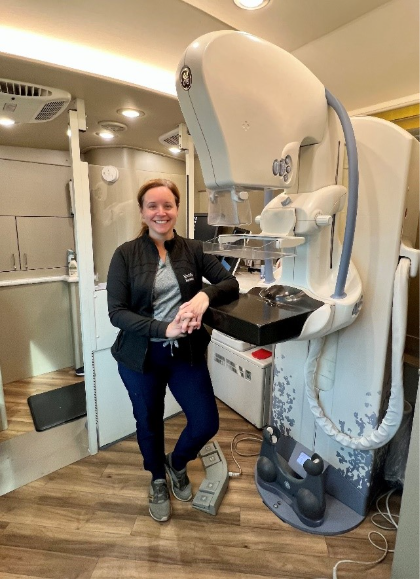 To debunk some mammogram myths, we talked to Michelle Opaski, a Medical Radiation Technologist (MRT) with the Screen for Life Coach at Thunder Bay Regional Health Sciences Centre.
 October is Breast Cancer Awareness Month, and a good time to learn more about breast cancer screening. To debunk some mammogram myths, we talked to Michelle Opaski, a Medical Radiation Technologist (MRT) with the Screen for Life Coach at Thunder Bay Regional Health Sciences Centre.
Myth: If you don’t have symptoms, you don’t need a screening mammogram.
Fact: A screening mammogram is intended to detect breast cancer before any signs or symptoms appear. Mammograms can find changes in the breast that are too small to see or feel, when cancer may be easier to treat. If you feel great, it’s the perfect time to get a mammogram.
Myth: Mammograms are painful.
Fact: Everyone experiences a mammogram differently. Some people find the compression uncomfortable or experience brief sensitivity, but the compression only lasts a few seconds for each image.
Compression is important because it spreads out the breast tissue, helping create a clearer image while using as little radiation as possible. Let your Medical Radiation Technologist know if you are uncomfortable or have questions during your appointment.
Myth: A doctor referral is needed to book a screening mammogram.
Fact: If you meet the eligibility criteria for average risk screening through the OBSP, you do not need a referral from a doctor or nurse practitioner. This means you can book a screening mammogram even if you do not currently have a primary care provider.
People who meet the criteria for the High Risk OBSP follow different screening recommendations and require a referral from a primary care provider.
Myth: I’m in my 40s, so I’m too young for a mammogram.
Fact: Breast screening in Ontario now starts at age 40 for most eligible people. If you are between the ages of 40 and 74 and at average risk, you can book your own screening mammogram through the OBSP.
For people ages 40 to 49, Ontario Health encourages a conversation with a health care provider or Health811 about your personal risk factors and the potential benefits and limitations of screening to help you decide what is right for you.
Myth: All breast cancers can be detected on a screening mammogram.
Fact: No screening test is perfect, and mammograms are no exception. Many factors, such as breast density, can influence the image. However, screening mammograms are the best screening tool health care providers have to find breast cancer early.
Myth: I don’t have a family history of breast cancer, so I don’t need to get screened.
Fact: You do not need to have a family history of breast cancer to be at risk. While having a family history can increase your risk, breast cancer can also occur in people with no family history of the disease. In fact, only about 5–10% of breast cancers are hereditary, meaning they are caused by an inherited gene mutation.
To learn more about breast screening in Northwestern Ontario, including eligibility guidelines and locations, visit tbrhsc.net/breast-cancer-screening.