Your Breast Cancer Risk May Change Your Screening
by Jasmin Fisher
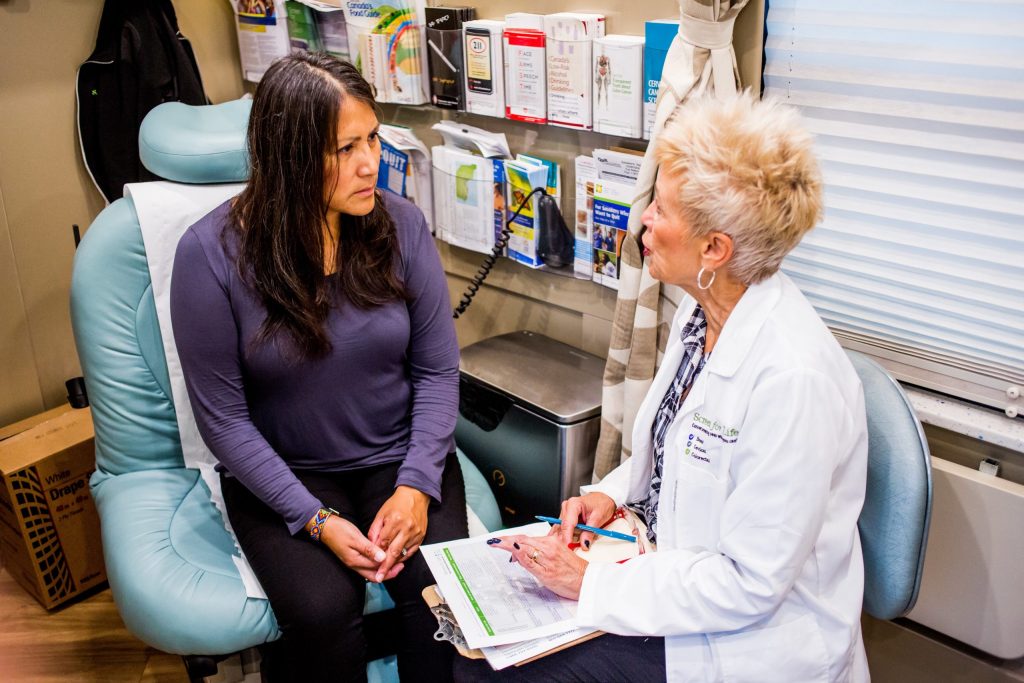 Ontario’s High Risk Breast Screening Program is available to eligible women, Two-Spirit people, trans people and nonbinary people between the ages of 30 and 69 who meet specific criteria.
For most people in Ontario, routine breast screening begins at age 40 through the Ontario Breast Screening Program (OBSP). For people who have a higher chance of developing breast cancer because of certain genetic, personal or family history factors, screening may need to begin earlier and happen more often.
“Breast screening isn’t necessarily the same for everyone,” says Dr. Nicole Zavagnin, Regional Primary Care Lead for Ontario Health – Cancer Care Ontario at Thunder Bay Regional Health Sciences Centre. “Most people will follow the routine screening recommendations, but there is a smaller group of people who we need to monitor more closely due to their risk and potentially screen them differently.”
Ontario’s High Risk Breast Screening Program is available to eligible women, Two-Spirit people, trans people and nonbinary people between the ages of 30 and 69 who meet specific criteria.
Someone may qualify because they carry a gene variant known to significantly increase breast cancer risk, such as BRCA1, BRCA2, TP53 or PALB2. Other people may qualify because a formal assessment has found they have a greater lifetime risk of developing breast cancer based on their personal and family history, or because they received radiation therapy to the chest to treat another cancer before age 30.
“We hear from people who assume that because their mother, aunt or grandmother had breast cancer, they automatically fall into the high-risk category, but it’s more complex than that,” says Dr. Zavagnin. “The number of family members affected, their age at diagnosis, the types of cancer involved and which side of the family those cancers occurred on can all be important.”
For people who are confirmed to be at high risk, screening is more intensive. Screening begins at age 30 and they are generally screened every year using both a mammogram and breast magnetic resonance imaging (MRI), or another appropriate imaging test if MRI cannot be used.
Unlike the average-risk pathway, those entering the High Risk OBSP require a referral from a family doctor or nurse practitioner, and may first need genetic counselling, testing or a formal risk assessment.
Dr. Zavagnin encourages people to learn what they can about their family health history, particularly which relatives have had cancer, what kind of cancer they had and approximately how old they were when they were diagnosed.
“You don’t have to determine on your own whether you’re high-risk,” she says. “If something in your history concerns you, bring it up with your health care provider. They can help determine which screening pathway is right for you.”
This Breast Cancer Awareness Month, take a few minutes to learn about your personal and family health history. Knowing more about your risk can help ensure you get the type of breast screening that is right for you.
To learn more about breast cancer screening in Northwestern Ontario, visit tbrhsc.net/breast-cancer-screening.