What Can Your Poop Tell You?
by Jamin Fisher
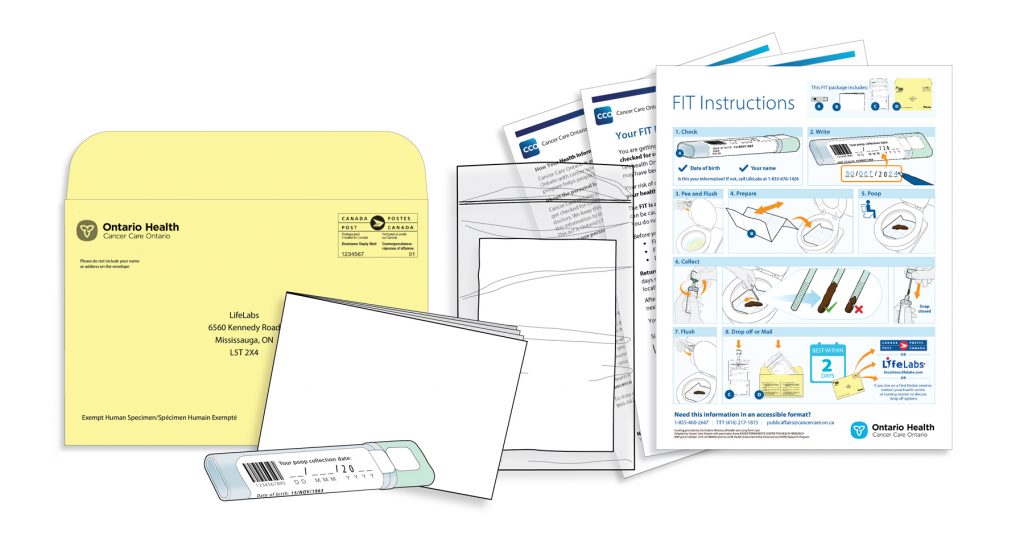 The fecal immunochemical test (FIT) has been used to screen for colon cancer in Ontario since 2018. It is a test that effectively detects microscopic amounts of blood in the stool.
It’s not a conversation most people want to have: stool samples and cancer. But when it comes to colon cancer, avoiding the conversation can be far more uncomfortable than having it.
Colon cancer often develops without symptoms, which is why regular screening is one of the most effective ways to catch the disease early. In many cases, the first warning sign is something only a stool test can detect. When detected and treated early, 9 out of 10 people with colon cancer can be cured. Yet in Northwestern Ontario, 42 per cent of eligible adults are overdue for screening.
“For most people between the ages of 50 and 74 who are at average risk and have no family history of colon cancer, screening starts with a simple test you can do at home every two years,” says Dr. Nicole Zavagnin, Regional Primary Care Lead for Ontario Health – Cancer Care Ontario at Thunder Bay Regional Health Sciences Centre. “The fecal immunochemical test, or FIT, looks for tiny amounts of blood in the stool that aren’t visible to the eye and can be an early warning sign of cancer.”
One common myth that prevents people from getting screened is the belief that the test is invasive. “A FIT is not a colonoscopy,” explains Dr. Zavagnin. “It’s a simple at-home test that involves collecting a small sample of stool and does not require a hospital visit, sedation, or time off work. If you have a family history of colon cancer, it’s important to talk with your healthcare provider about the screening option that’s right for you. When a FIT result is abnormal, a colonoscopy is the important next step to find the cause.”
Another myth about cancer screening is that if someone feels healthy, they don’t need to get tested. In reality, screening is designed for people who feel well, before symptoms appear or illness develops.
“Screening is a proactive step you can take while you’re feeling healthy,” says Dr. Zavagnin. “It gives us the best chance to find cancer early, when treatment is less complex and outcomes are significantly better.”
This Colon Cancer Awareness Month, ask your healthcare provider if you are due for screening. People without a healthcare provider can get a FIT from the Screen for Life Coach (807-684-7777) or by calling Health811. The test is quick, private, and covered by OHIP for eligible individuals.
Talking about colon cancer screening might feel uncomfortable at first, but it can be one of the most important conversations you have.